This summer we had three organic high-oleic sunflower trials in Oxford and Goldsboro. These studies included a high-oleic sunflower variety trial at two planting dates, a planting density study, and a nitrogen rate study. For each trial we’ll be comparing yield, oil content, and oil quality. We look forward to sharing these results as they become available.
Organic Sunflower Harvest and Processing
(Updated: Nov. 28, 2023, 9:24 a.m.)
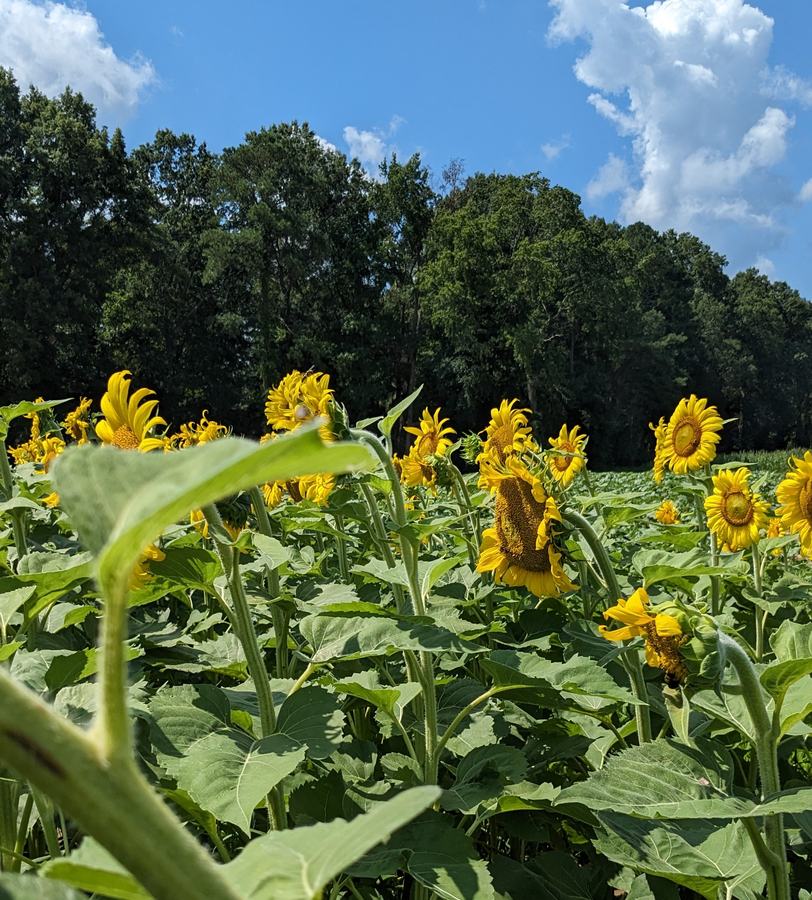
Sunflower plot in Goldsboro, NC mid-July
In September, with the help of the Official Variety Testing team, we harvested our sunflower plots. While most of our research was harvested with a small plot combine, at harvest we also took representative sub-samples of sunflower heads from each plot to assess for sunflower moth damage and seed weight.
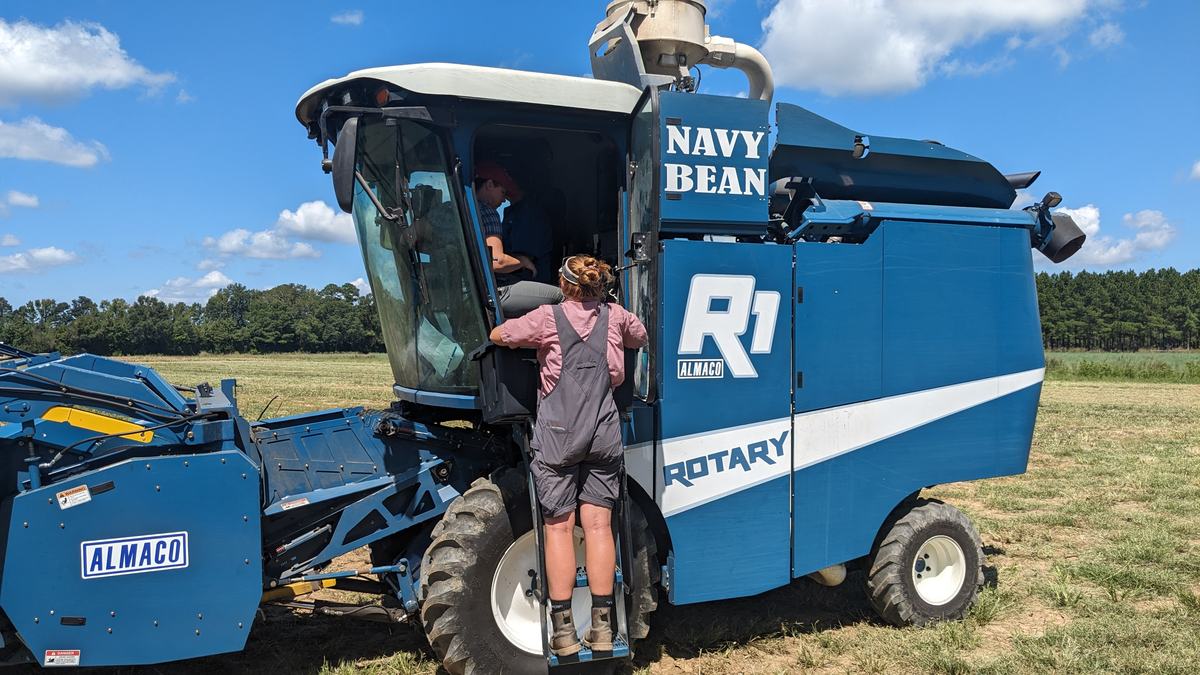
Small plot combine used to harvest sunflower
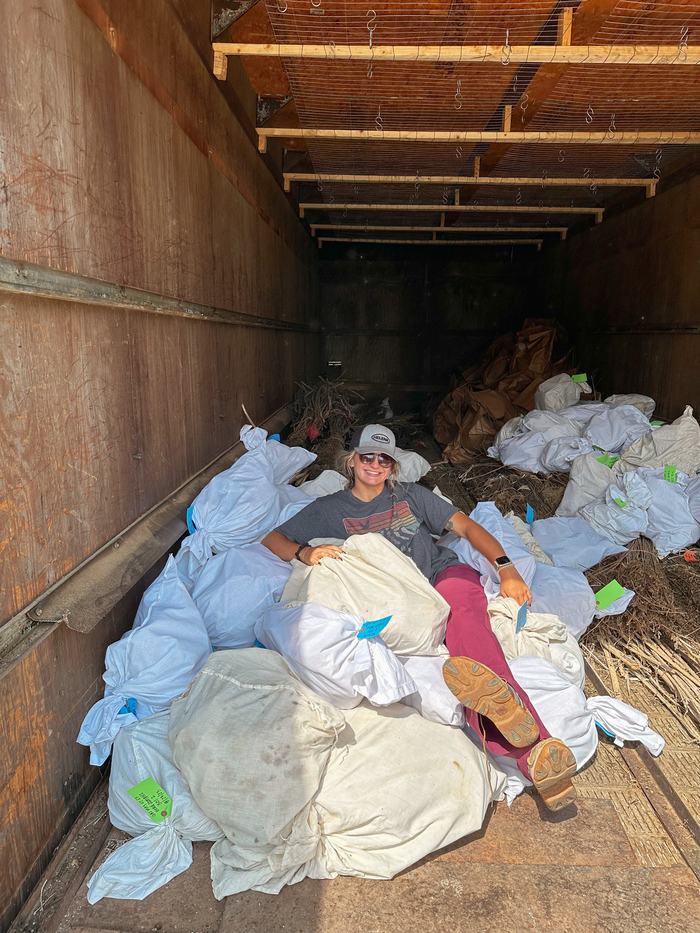
Sunflower head sub-samples in dryer
We are in the midst of processing these sub-samples. Processing includes threshing each sunflower head by hand, weighing the cleaned sub-sample, and assessing seeds for sunflower moth damage.
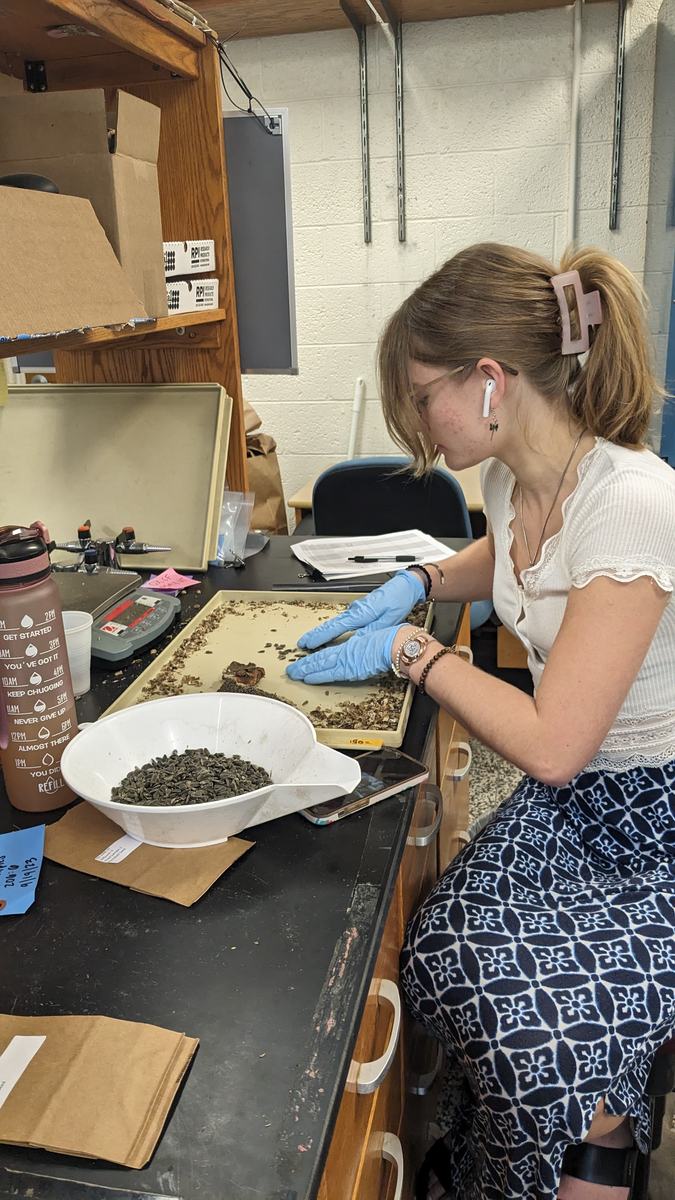
Student threshing sunflower sub-sample
Sunflowers show changes in head size and seed weight in response to environment and management. We're interested to see how management factors in our trials such as planting density and nitrogen will influence seed weight and seed per head, as well as yield.
We’ll be assessing insect damage by looking for entry and exit holes at the top of the seed as well as other damage such as hollowing of the kernels. This damage is created by sunflower moth larvae.
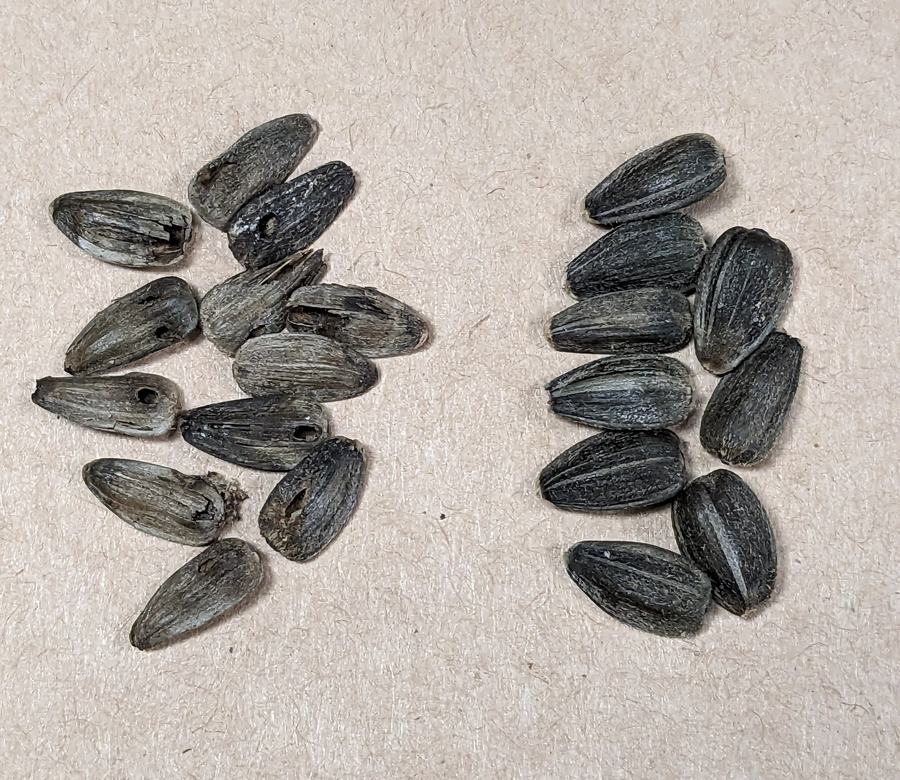
Seeds with sunflower moth larva damage on the left and non-damaged seed on the right
Our primary pest concern in North Carolina sunflower production is the sunflower moth. The larva of the sunflower moth cause direct damage to sunflower heads during the growing season causing yield loss and increasing the risk for secondary infections in exit wounds. Differences between sunflower moth damage in our variety trials, which had two planting dates, may inform our recommendations for an ideal planting window and variety. The sunflower moth is a migratory pest that has multiple generations in a year. With an earlier planting date there may be potential to avoid sunflower moth during its peak migration. In assessing for sunflower moth damage, we’ll also be assessing differences in resistance among commercially available high-oleic varieties.
As we analyze our summer’s data we’ll continue to share preliminary results.
We also have a few other email lists you can subscribe to.
Written By